Build the skills employers are hiring for
Short, practical courses written to help you get hired and progress — study at your own pace and earn a verifiable certificate.
Find your next courseAn awareness course based on Care Certificate Standard 12. It explains how to recognise cardiac arrest, call for help, and what the current Resuscitation Council UK guidelines ask for in CPR, defibrillation and choking, as well as how DNACPR and ReSPECT decisions work in care settings. This is theory only. It does not train you to carry out basic life support and does not replace the practical, instructor-led training that Standard 12 requires. Five modules, eighteen lessons, around two hours, finishing with an assessment and a SupportiveBridge certificate of completion for this awareness course.
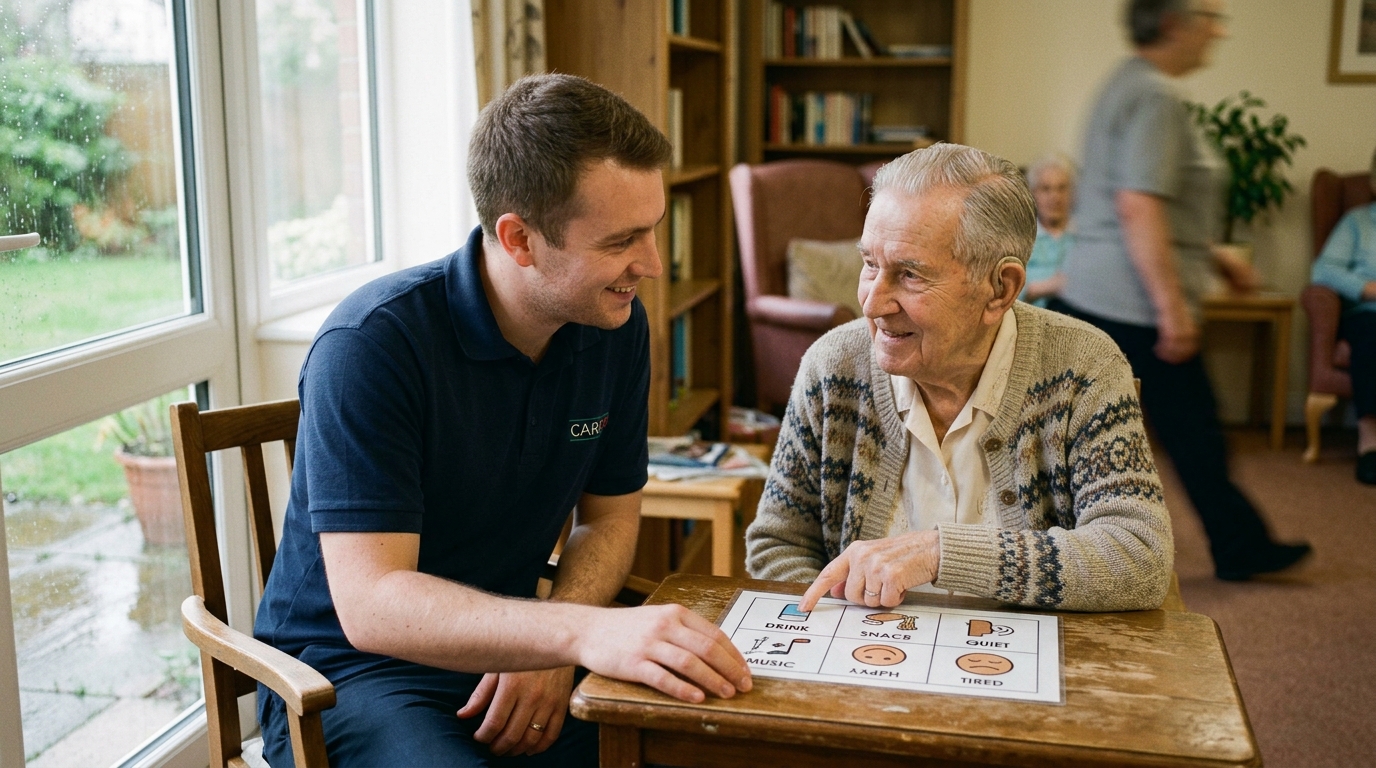
This course covers Care Certificate Standard 6, Communication. It looks at why communication matters at work, how to meet each person's communication and language needs, how to reduce barriers, how to keep information confidential in everyday work, and how to get support, handle difficult conversations and keep clear records. Five modules, eighteen lessons, around two hours, finishing with an assessment and a SupportiveBridge certificate.
This course is for care and support workers who want practical, safe ways to deal with conflict and behaviour that challenges. It covers why conflict arises and what behaviour may be communicating, preventing problems through knowing the person and shaping the environment, calm de-escalation and when to step away, the legal limits on restraint, rights, reporting and recording, and handling conflict with relatives and colleagues. Five modules, eighteen lessons, around two hours, finishing with an assessment and a SupportiveBridge certificate.
A practical course on the Control of Substances Hazardous to Health (COSHH) Regulations 2002 for care workers, support workers and healthcare assistants. It covers what COSHH requires of employers and staff, the chemicals and biological hazards found in care homes, supported living and people's own homes, how to read hazard labels, safety data sheets and COSHH assessments, safe use, PPE, skin care and storage, and what to do about spills, exposures, waste, sharps and reporting. It supports the knowledge behind Care Certificate outcome 13.6, Handle hazardous substances. Five modules, seventeen lessons, just under two hours, finishing with an assessment and a SupportiveBridge certificate.
This course explains the Deprivation of Liberty Safeguards for care workers in England, updated for the Supreme Court's ruling of June 2026, which replaced the Cheshire West "acid test" with a judgement across several factors, including whether the person objects and whether they give valid consent through their wishes and feelings. It covers the right to liberty and where DoLS sits in the Mental Capacity Act, how to recognise a possible deprivation of liberty, how urgent and standard authorisations work, the person's rights and the roles of representatives, advocates and the Court of Protection, and your part in daily care, including supported living, home care and young people. Five modules, eighteen lessons, around two hours, finishing with an assessment and a SupportiveBridge certificate.
This course covers Care Certificate Standard 3: Duty of Care. It explains what duty of care and duty of candour actually mean, how to recognise and respond to dilemmas where safety and a person's own rights pull in different directions, how to handle comments and complaints properly, how to recognise and report incidents, errors and near misses, and how to manage confrontation and difficult situations safely. Five modules, eighteen lessons, around two hours, finishing with an assessment and a SupportiveBridge certificate.
This course covers epilepsy awareness for care staff: what epilepsy is, the main seizure types, how to recognise and respond to a seizure using the CARE steps, when to call 999, how care plans and medicines are used, everyday safety and sudden unexpected death in epilepsy (SUDEP), and the rights, driving rules and reporting duties that apply. Five modules, eighteen lessons, around two hours, finishing with an assessment and a SupportiveBridge certificate. This course is awareness-level training and does not teach the administration of rescue medicine.
A practical course for care workers on equality, diversity, inclusion and human rights. Learn what the law protects, how bias and discrimination show up in everyday care, how to respect each person's culture, faith and identity, and how to challenge, report and get support when something is not right.
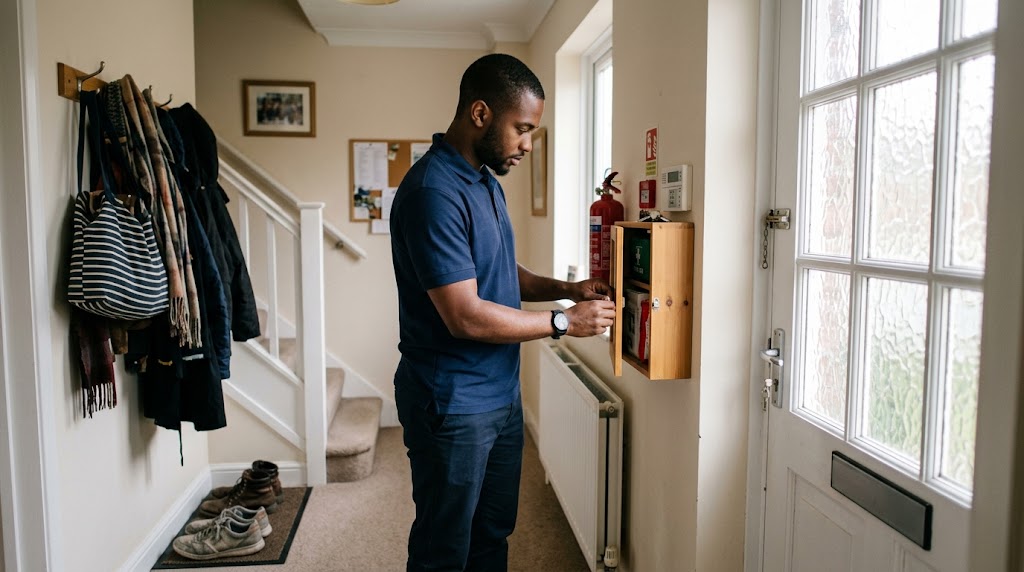
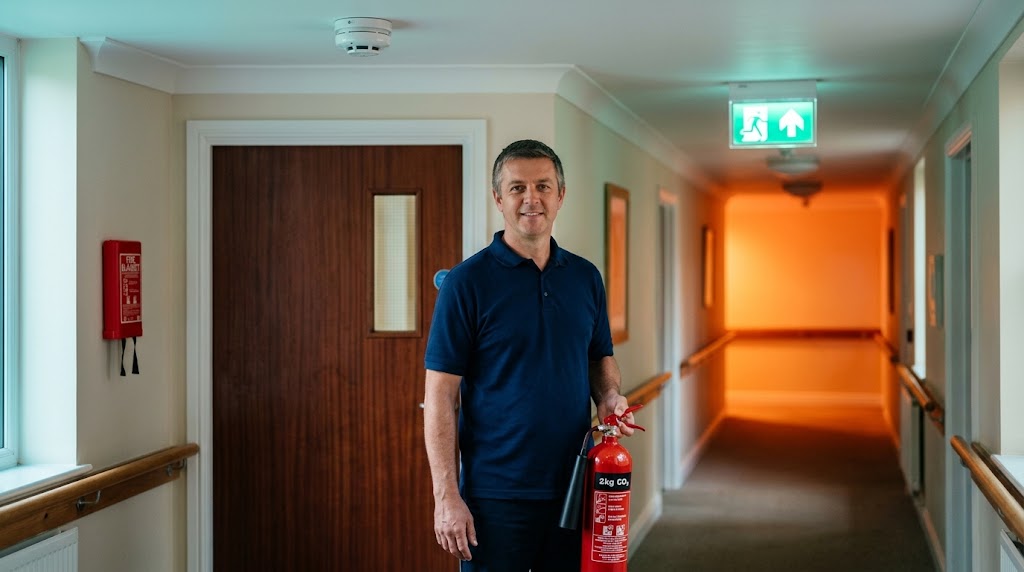
This standalone course goes deeper than the fire safety outcome in Care Certificate Standard 13 (outcome 13.7). It covers how fire starts and spreads, the Fire Safety Order and who is responsible, preventing fires including emollient, oxygen and lithium-ion battery hazards, detection, fire doors and equipment, emergency and evacuation planning, and what to do when the alarm sounds. It is written for England, with Wales noted. Five modules, eighteen lessons, around two hours, finishing with an assessment and a SupportiveBridge certificate.
This awareness course covers Care Certificate outcome 13.4 (accidents and sudden illness) and gives awareness of Standard 12 (basic life support). It teaches you to recognise an emergency, stay safe, call 999 clearly, understand what is left to people with practical training, and report and recover afterwards. It does not teach or certify practical first aid or CPR skills, and it does not make you a qualified first aider. Five modules, eighteen lessons, around two hours, finishing with an assessment and a SupportiveBridge certificate.
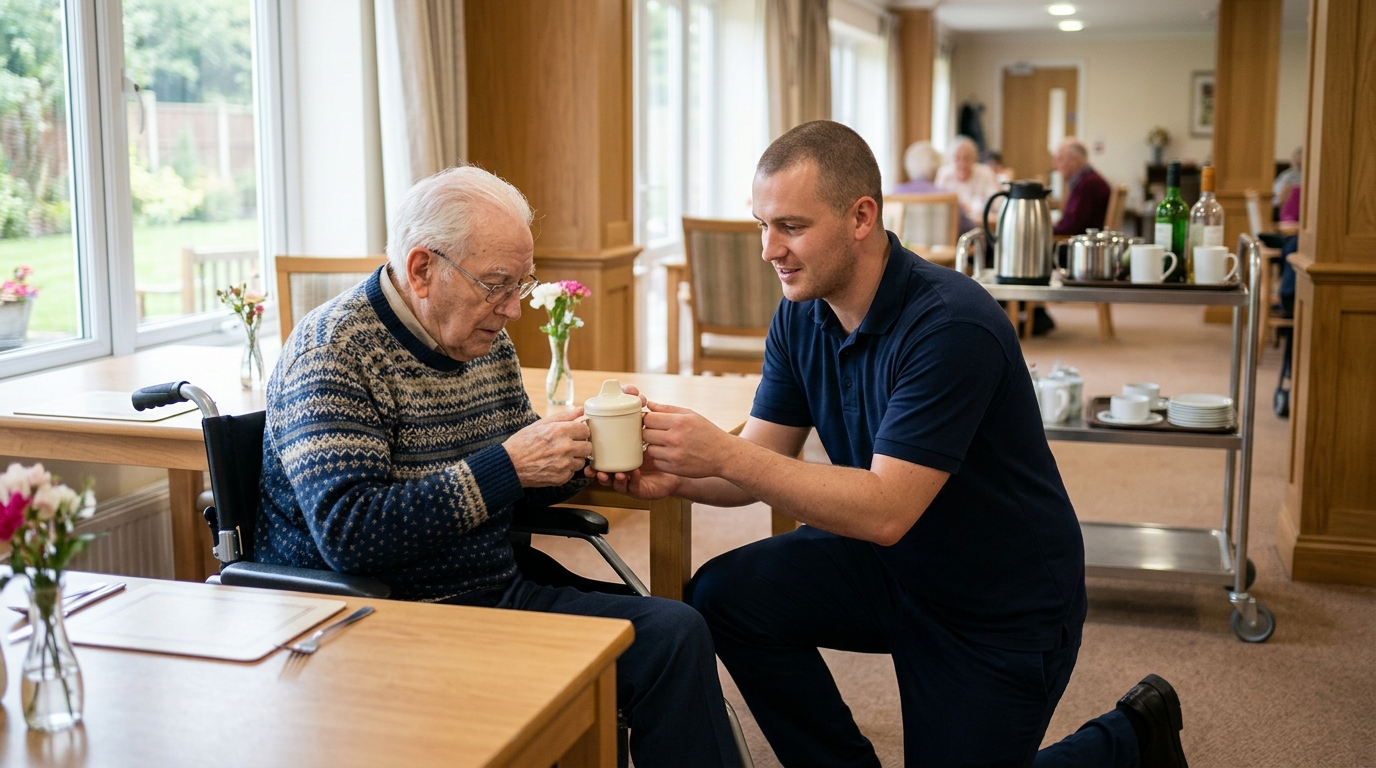
This course covers Care Certificate Standard 8, Fluids and nutrition. Across five modules you learn why food and fluids matter and how poor nutrition and dehydration show, how to promote, notice and report changes in eating and drinking, the food safety and hygiene rules that protect older and vulnerable people, and how to support people to reach drinks and food in line with their plan of care. Five modules, eighteen lessons, around two hours, finishing with an assessment and a SupportiveBridge certificate.
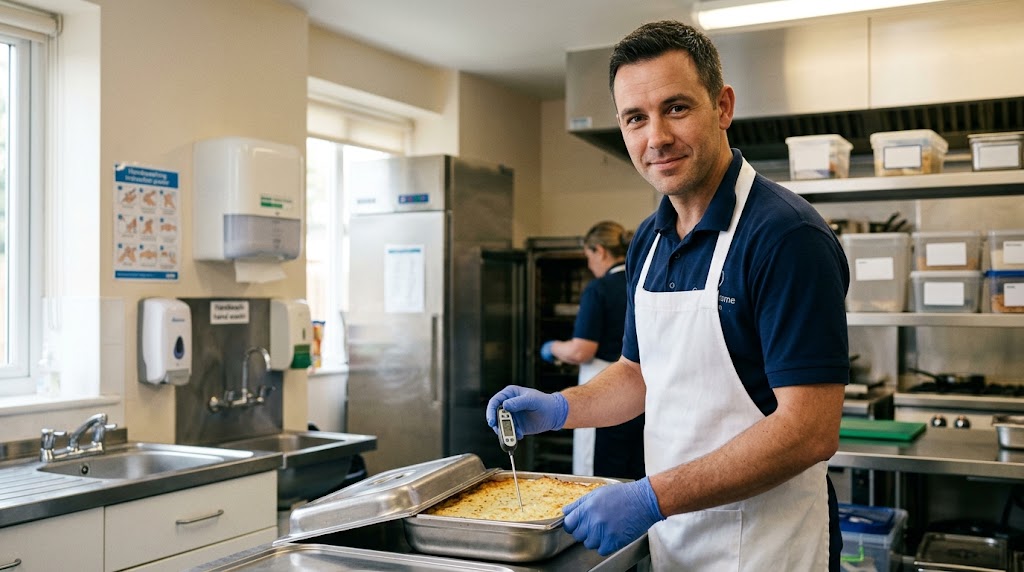
A practical course for care staff who store, prepare, serve or help with food. Covers why food hygiene matters, personal hygiene and fitness to work, cross-contamination and cleaning, temperature control, allergens and reporting problems.
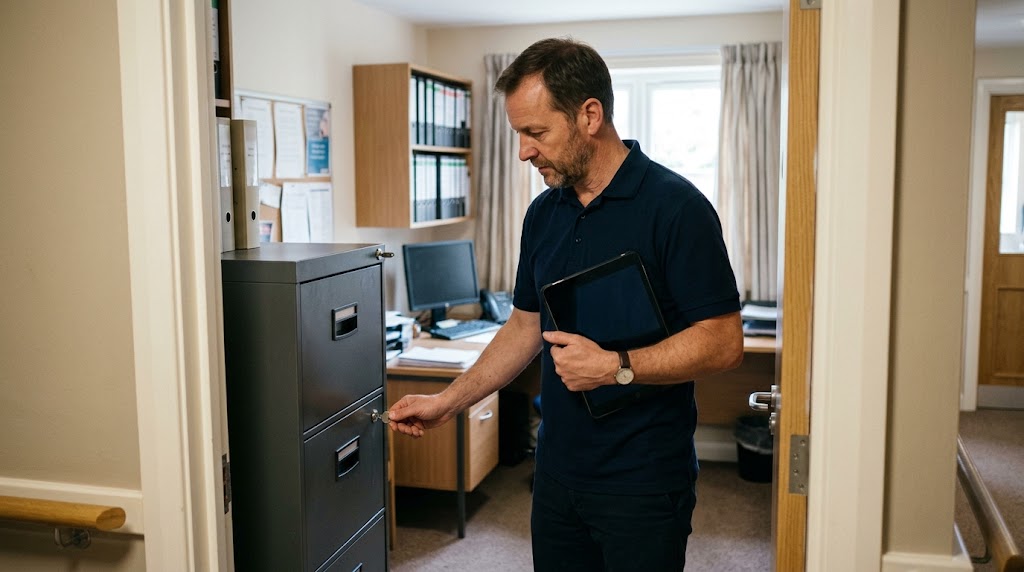
This course explains how UK GDPR, the Data Protection Act 2018 and the duty of confidence apply to everyday care and support work, including the changes made by the Data (Use and Access) Act 2025. It covers what counts as personal information, the rules for using and recording it, confidentiality in conversations, calls and messages, when information can be shared, and what to do about requests for records, security risks and data breaches. Five modules, eighteen lessons, around two hours, finishing with an assessment and a SupportiveBridge certificate.
This course covers Care Certificate Standard 14, Handle Information. It explains what counts as personal and confidential information and the law behind it, who may see and share information and what to do when someone asks for it, how to keep clear and honest records, how to store information and keep systems secure, and what to do when a breach or concern arises. Five modules, eighteen lessons, around two hours, finishing with an assessment and a SupportiveBridge certificate.
Covers Care Certificate Standard 13, Health and safety. Five modules cover health and safety responsibilities and risk assessment, moving and assisting and responding to accidents and sudden illness, medicines, healthcare tasks and hazardous substances, fire safety and staying secure, and looking after your own mental health and wellbeing. Five modules, eighteen lessons, around two hours, finishing with an assessment and a SupportiveBridge certificate.
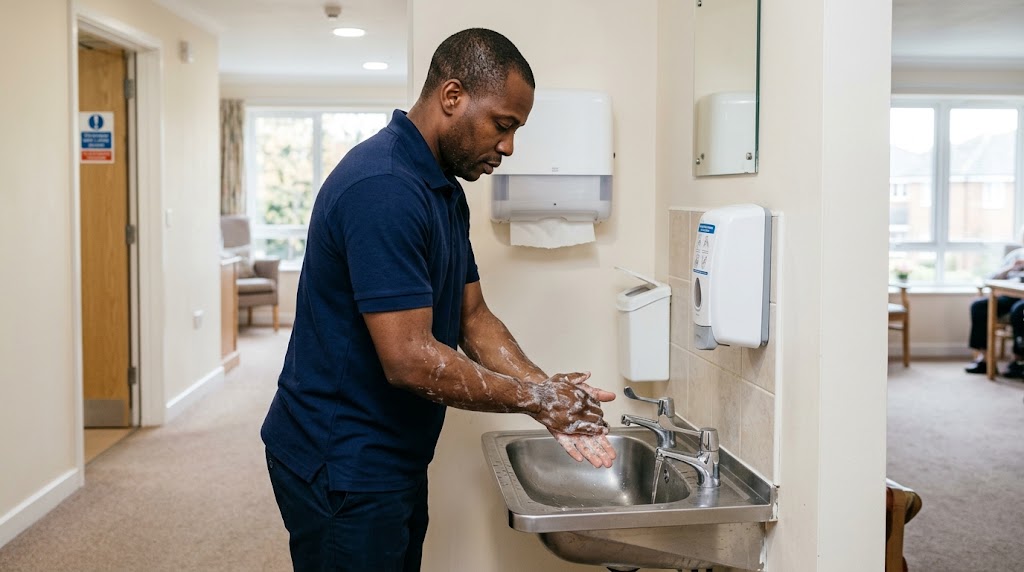
This course covers Care Certificate Standard 15, Infection Prevention and Control. You will learn how infection spreads and the six links in the chain, what standard precautions are, how and when to clean your hands, how to use personal protective equipment, how to clean equipment and the care environment, and how to deal with spills, laundry, waste and sharps. The final module covers spotting the signs of infection and your part in an outbreak. Five modules, eighteen lessons, around two hours, finishing with an assessment and a SupportiveBridge certificate.
This is an awareness-only, theory-only course based on Care Certificate Standard 16. It is not the Oliver McGowan Mandatory Training, and completing it does not meet Standard 16 or the legal training requirement on its own. It covers why the training exists and where to get it, what a learning disability and autism are, communication, sensory needs and reasonable adjustments, health inequalities, the Mental Capacity Act 2005, restrictive practice and positive behaviour support, safeguarding, and working with families. Five modules, eighteen lessons, around two hours, finishing with an assessment and a SupportiveBridge certificate of completion.
A plain-English introduction to how medicines are supported safely in UK care settings: the law, care planning, storage, giving and recording, and what to do when something goes wrong.
This course explains the Mental Capacity Act 2005 for people who work in adult care in England and Wales. You will learn the five principles, how to support decisions and use the two-stage test of capacity, how best-interests decisions are made and what legal protection section 5 gives you, and where lasting powers of attorney, the Court of Protection, advance decisions and independent advocates fit in. The last module covers restraint, deprivation of liberty at awareness level, safeguarding and good records. Five modules, eighteen lessons, around two hours, finishing with an assessment and a SupportiveBridge certificate.
Covers Care Certificate Standard 9: the needs and experiences of people living with mental health conditions or dementia, promoting positive health and wellbeing, reasonable adjustments and reporting unmet needs, early detection and signposting, and the legal frameworks — human rights, equality law and the Mental Health Act — that shape day-to-day care. Five modules, eighteen lessons, around two hours, finishing with an assessment and a SupportiveBridge certificate.
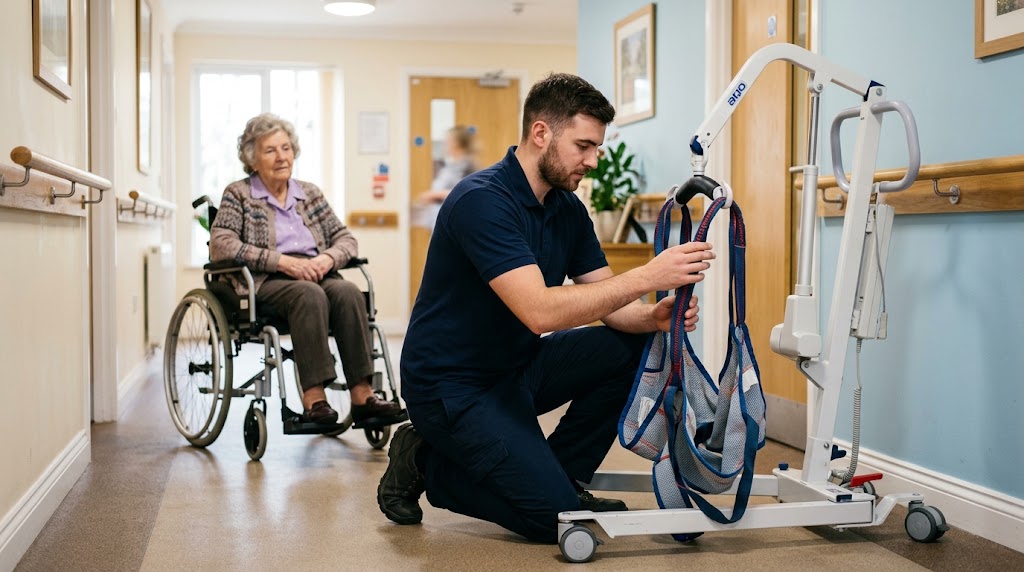
This course goes deeper into Care Certificate Standard 13.3, moving and assisting safely. It covers the main laws and regulators, assessing people and risk, hoists, slings, bed rails and everyday equipment (including the September 2026 MHRA alert on hoists and slings), dignity, consent and communication, the limits of your competence, and what to do after a fall or an incident. It is theory only: practical handling skills must still be learned and signed off in person. Five modules, eighteen lessons, around two hours, finishing with an assessment and a SupportiveBridge certificate.
Oral Health in Care Settings is a practical course for care and support workers who help people with their daily personal care. It covers why oral health matters, common mouth problems and warning signs, daily care of natural teeth and dentures, oral health assessment, care plans and records, and person-centred mouth care including when someone declines. Five modules, eighteen lessons, around two hours, finishing with an assessment and a SupportiveBridge certificate.
This course covers Care Certificate Standard 2, Your personal development. You will learn how learning needs are identified and a personal development plan is agreed, how feedback, supervision and appraisal help you improve, what literacy, numeracy, communication and digital skills your role needs, how to reflect on your work and measure yourself against published standards, and how to use learning opportunities, record your progress and understand why continuing professional development matters. Five modules, eighteen lessons, around two hours, finishing with an assessment and a SupportiveBridge certificate.
An original SupportiveBridge course on working in a person-centred way: the values behind good care, how to find out what matters to each person, mental capacity and consent, comfort and distress, and how identity and self-esteem affect wellbeing.
Email our team and we’ll point you to the right one.